Wednesday, June 17, 2015

Great training week end


Great training week end
                This week end I had the honor and the privilege to train again with Saeki Sensei of Ottawa Canada in Saskatoon Saskatchewan….I have never been to Saskatoon but it is a beautiful city and the training was good, food was great, city…while a bit confusing…fantastic and pretty, and the people…well top notch and I have to Say Brad Barnes is one heck of a guy!
                It was kind of funny because you often learn things you don’t expect to learn and some lessons that you thought you knew are presented to you all over again in new ways. Keeping in mind I still have a injury to my hip and cant, or rather probably should not kick with my left leg and may stability is shot when it acts up..and I have an obvious limp…Just had minor surgery and had stomach issues the whole time I was out their…but damn it I am not dead and I gave it all I could! It was great fun.
                One of the terrifying things that tends to happen at these camps is you meet new people. I say terrifying because as a quasi-introvert I hate being in strange places with people I do not know…but this time it was very much different, we had met once before and to be frank the plethora of new people I met…were like family in seconds.  I met a brown belt that had trained with Jeff Speakman and the guy (not Jeff) was super friendly. I met a actual Viking…well that’s his nick name, who was so funny and just a fantastic guy. I met a few ‘old friends’ and Brads wife, a lovely warrior of a lady!  Also I met more of the students from Saskatoon and each and every one of them were fantastic!
                They treated us like kings, we ate at great restaurants…one Pho restaurant has me hooked on Pho now and to be frank its going to be hard not to want to zip back and eat their again! And the highlight of one of our work outs was after the work out Henri, one of the incredible brown belts, did an Iaido demonstration that really impressed me and made my day….I love sharp cutty swords! And his son helped him out, it was another fantastic day.
                We hung out with “Tank” or Henry and the rest of the crew and just being around such great people made my week end…never mind that we had hours and hours of training with one of the BEST instructors in North America…hands down and bar NONE Saeki Sensei is one of the very best and even the way he teaches juniors amazes me! Truly a gentleman and a fantastic person.
                Sometimes however you get lessons that are not even those that the instructor is teaching. This time it was a big lesson for me in humility. I was really hurting one day, lots of training…bad stomach cramping and  sore hip really put the damper on my normal Kamakazi style that lead to my moto “I aint dead yet” but this time…it was more like “I am still upright” and I wanted in on the fun. I was bouncing from one senior to the next, I did drills and some light Kumite with several of the instructors and seniors, including Brad and some of his black belts.But on one rotation I was looking around and I saw this white belt, a shy girl that was just kind of hiding near the seniors that were all paired up.
I noted one of the seniors had a chance to work with her but literally walked right past her and grabbed a black belt to train with.  It did not shock her and I don’t think she expected to train with an actual instructor at this event, I mean specifically this guy. The senior in question kind of had an attitude issue that reminded me of one of my seniors, but this guy was not even close to being technically…well good. The guy had previously been spewing on about how he was able to fix techniques with people..blah blah blah…and here he was not training with a little girl (I say little more like young, she is probably about my size) and then bragging about how good an instructor he is.
I pulled a James and figured screw it I want to work with her…and really, most fun I had that day. What a doll of a girl! And Saeki Sensei noticed the other senior as well and then came over to make the girl feel better too.  Not only did it prove that Saeki Sensei is a fantastic person…it proved to me that some people, when given rank….just get a big head!
 I also saw the way Brad treats his students. Not a single one is NOT family! He has closer students than others, some he probably see as just friends who happen to train with him, but he treats his students like family and it shows. While his style is not yet JKA and the group of them have been training in a style similar to ours, they have a great coach and Sensei in him and I am sure that he will bring them to the JKA system with the caring hands he showed at camp. And he did this while losing his head trying to arrange things and meet with his incredible staff to ensure everything was perfect.
Another thing I saw in Brad that I totally respect was the amount of work that he does is not ever something he brags about. He coordinates not only a Dojo…well kind of a set of Dojos’ but trust me go train their and figure it out for yourself…but he also coordinates school programs like a mad man. Yes he has tones of help, but he has been working to join the JKA for a while and not once has any of his work been public knowledge for him to brag about…just working doing all this and coordinating with his staff…who are equally hard working and the whole time…he simply tells me its all them…but I know better!
He also does something I have rarely seen in instructors and something I try and do as often as I can and will continue to do, he gives his team a pat on the back as much as possible.  At a major event were Saeki Sensei is brought in to teach, many different groups are brought in to train, the lunches and scheduling, dealing with the schools, Children, adults and families….Brad took the time to thank his team…and not just in a “Thanks team” way but individually. It was really cool of him and again shows his passion for Karate! 
 
Now, the Karate training was top shelf for sure! I mean Saeki Sensei is one of the best for sure! And the classes….well I think Brad hates us all. First day was a two hour training session with half for junior stuff then half for senior stuff…then a second one in the afternoon. THEN the afternoon was a three hour session with half for juniors half for seniors….and the next day….two hour general session to start and then a two hour session in the after noon. The fun note….Saeki Sensei went over each class and we ended up with about 7- 8 hours of training each day.
 
Saeki Sensei of course leaves a very good impression every seminar and even when he is asking you to do your best and then a tad bit more you want to do that for him because he teaches without ego and shows you how to do things not just barking orders. His classes show his absolute knowledge of Karate and its amazing.  And he is so good with students that you just want him back!
 
What a great week end of training, next time I will be in better shape to have an even better time!


The Science of that kicky hitty stuff….er Karate striking!


The Science of that kicky hitty stuff….er Karate striking!
                So, I took a class from the fantastic instructor Saeki Sensei in Saskatoon Saskatchewan this past week end and it was fantastic. First off the group in Saskatoon is off the chain nice and anyone passing through that town NEEDS to contact Brad Barnes to get in a few classes with this crew. They are so nice its like finding out you have family in some town you have never been to and then just clicking when you get their…and damn if they are not great hosts.
 
                But I digress, the point was that Sensei brought up some Physics in one of his classes, just a brief mention of the Force Equation and off my mind was reeling. And as any of you regular readers of my blogs will know…I don’t sleep much so I had TONES of time to look at the equation and really wrap my head around it. First off…I suck at math, but ideas and mechanical philosophy…that’s FUN to me. So, I started to explore it from a “how can I make someone hit ‘harder’” point of view and realized a few things.
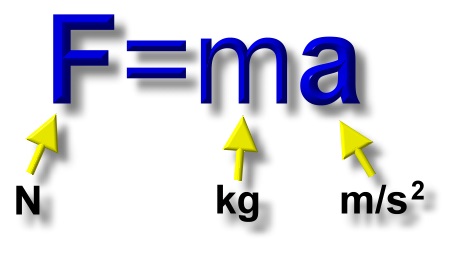
                First off for those that don’t know the equation for force generation is F=M*A.  F- is the end resultant of the other two and represents the amount of force that one can generate. Think of it as “if I hit a Makiwara how much energy is actually going into the darn thing”…that’s force.  But how do we get to this. Okay, you take the amount of Mass that one has to recruit (the ‘M’ in the equation obviously) and you times it by the speed or acceleration (the “A” in the equation) and that’s what the FORCE is.  So, if I have an amount of mass I can recruit of say 10, meaning my bone, muscle recruitment…..note I was not saying how much muscle I had..but it is part of it, and how much tissue is involved and I throw the punch just with my arm movement like a boxer and say the acceleration represents 10 again….well I have a equation of F=10*10 or F=100. In this case the outcome is in a unit called a Newton…as in Sir Isaac Newton.
 
                Great, cool! What the hell does that mean to me…and well….so what right! Well, to really dig deeper we would need to learn more about kinetic energy, power, Torque, Rotational power, Work energy and Efficiency, Impulse momentum, lines of force, efficiency, momentum, and velocity to name a few….Oh, Did I mention I totally GEEK out from time to time….but we don’t have time for all that so I am going to just show you what I was thinking using the old F=M*A equation as a fall back. And yes, I know its not 100% but lets face it we are learning to punch someone in the face…its not rocket science…well you know what I mean.
 
                First off let me say that this simple view will be based on how to improve someone’s force, it wont make them “better at Karate” in general, its just a point of view on force development in a single technique. I will be using Gyaku zuki, my favorite technique, to explain this theory of how to improve your power/Force. As an instructor I see so many mistakes and also find little answers when teaching people. We are intrinsically all genius level athletes at the core of our being, we just let things like life, work and such get in the way of our development in this regard. When we are born our body has an unlimited amount of potential to do anything and over time we tend to let things go, we work in one direction and away from our inner athlete and develop skills in other fields.
 
                Each human has a potential mark when talking about applying force. We have what I like to call a terminal velocity point for power generation and a terminal mass point as well, which means we have a terminal force point as well. What that means is we can only recruit so much mass and strength and move so fast so we can never out ‘power’ our own potential ‘power’ point. However I also think that 99.9% of Karate people tend to strike way way way below their terminal point. What I means is that big bad Sandan wacking away at that Makiwara is missing something that would  make him really bend the wood back or even snap it…and he does not know it! They strike away impressed with the ‘thwack’ it makes and forget that they could be devastatingly better.
 
                Many years ago a university did a study on force production by using a sensor pad and having a famous boxer (heavy weight) come in and strike it on a heavy bag and a famous Karate guy do the same. The boxer was ten years younger and a great deal bigger than the Karate expert and everyone thought it was not fair to have this be the corner stone of the study….except the Karate people…they felt bad for the champion boxer. The boxer struck the machine 8 times and his average was about 800N per strike, about enough to give you a major concussion and knock you out easily. This is actually very impressive as most Karate students up to Nidan average about 600N.
 
                The Karate instructor stepped up and hit the pad one time. He then walked over and picked up his jacket and put on his glasses and bowed to the scientists and left. His strike measured 1200N…enough to bread your skull and kill you. The reason was not he was stronger! The Heavy weight fighter was probably strong enough to really hurt the Karate instructor if it was a wrestling match….the reason…he was more efficient and had a much faster punch…the acceleration was off the scale.
 
                So, how do we as Karate-ka and Instructors help ourselves and others increase our force or power in our strikes. Well essentially you need to increase your mass or your acceleration…so get stronger and bigger or faster.
 
                Before we dig a bit deeper into this very shallow representation I want to make one thing clear, if you don’t have efficiency and technical form none of this will work! If your technique is off or you don’t have efficiency in your movements then not only will you lack the increase in power you want but you are more likely to hurt yourself and not generate any power really. In fact it may be that this is the most important part of being able to increase your striking power. The two people I mentioned were real, one was a boxer that threw punches with his trunk and arms only the other a Karate master that used his stance, trunk and arm to create power…this made it much easier.
               
                So, one way to increase “power” or “force” is to increase mass. This, in our terms, means the ability to recruit more muscle for movement and  or strength. However, this is counter productive. First off most tools we have to increase mass include things like weight training and this means increased slow twitch muscle that puts a strain on the ratio between fast twitch and slow twitch muscle. Guys bulk up all the time to get stronger, lifting heavy weights and getting HUGE….but slow as hell. They push when they hit because they cant snap out a technique at all.
                It sounds like I am down on weight training, Im not. However if it is used to condition muscles to guard against injury and also to help with muscle recruitment then it is a good thing. However most people get sucked into the “bigger is better” ideal and they go nutty and get big. They forget form and start doing Karate like a weight lifter…they get slow and they are inefficient in their movements as they are working to “flex” the muscles improperly. Again, weight training and body weight exercises are FANTASTIC as an adjacent training component, but in my opinion an inefficient and counterproductive method for increased power in your movements.  
               
                If you use only power lifting and conditioning to increase your force the equation would be look something like F=10*10 > F=20*7…due to the decrease in acceleration potential and the increase in mass…the first equation equals 100N and the second 140N. That’s a whole lot of work for 40N!
 
                Now lets look at the other side of the coin, increasing speed/acceleration. To do this you need to include one other component that will help even more…..repetition. To increase speed you need to recruit muscle fibers faster and cause mechanical improvements to get your speed up, so as in the case of Gyaku zuki you will need better trunk rotation, better rotation of the shoulders/hips and a better rear leg connection to the floor….then you need to do it faster!
 
                So, to increase speed you need to have better form….to me this is the GOLDEN items that will make your Karate better! Why get bigger and slower when you can maintain your current mass and just get faster?  Well its not that easy to get faster. We all have a simple maximum speed we can get to and no amount of training will increase this potential point…but the nice thing is most of us are not as fast as we could be and we can overcome a bit more of that maximum with efficiency in movement and repetition of movement to make them automatic and correct.
 
                Keeping in mind that there are several intangibles that are not being really looked at, of which I mentioned previously, let’s look at increase speed/acceleration and why it’s better than building mass. If you can learn to recruit the proper muscles and use better form, then do it faster by repetition and basically better mechanics as well as building better speed you will have a more positive resultant than just mass. Why? Because you don’t limit your speed and you maintain your mass. So your equation looks more like F=10*10 > F=10 *15 for a total increase from 100N to 150N or more.
 
                One of the missing points as well is if you have bad form it brings down the total of acceleration and mass as well so by increasing your speed and improving your technique and Keeping mass about the same you end up with a formula that looks something like F=10*10  > F=13*15. So a total of 195N a 95N increase for just keeping fit and improving your speed and form a bit. That’s a great trade off!
 
                So after all of this, what does it mean for a coach/Sensei/Instructor? Or even as a student?  Well it means that when you are teaching Karate it is far more effective to teach proper form, good functional movement and recruitment of the proper muscles than it is to have them doing extra weight training and calisthenics. Its great to stay in shape but if you have poor form you will still hit like a marshmallow and you wont be able to affect great power transfer to the target. When teaching look at form, functional transference and then focus on speed when looking for more power in the techniques.
 
                Power and speed have many variants that affect them and the way that power is created and transferred, but it has been my experience that when people say they want to hit harder they don’t pay attention to the second part of the equation and focus on building strength and mass…and this inevitably ends up slowing them down and killing their power. Train for speed and form and you will get more out of the whole process in the way of results than if you were to go lift weights and not pay attention to the other more important ways to get ahead of the power game.


Thursday, March 26, 2015

Old style classes


               First off let me say I hate when people say “the old days” a lot in teaching or sit and tell tall tales of how the old days were better/harder/more of something….anything than it is today. If your Karate is not enough of a challenge you have two things to look at…is the instructor going easy on you or not know what they are doing…or more to the point, am I actually trying as hard as I can?
                Most of the issues with today’s training can be boiled down to two things, not enough training…not training hard enough personally. If you can’t figure out how to make a whole hour of stepping punch hard for you and a personal training high….then its you not the instructor that needs a good mental looking at! I remember classes were all we did was reverse punch for a full hour in Zenkutsu and I can tell you I still have nightmares about how hard that class was!
                What I want to show is how the class structure has changed from old classes over the years and what we can do as a Karate-nation to bring them back…if your classes are set up differently now that is. The fact is that Karate has not changed in structure and function in over 300 years, hell maybe longer depending on your belief system! However….How we teach it has changed a lot over the years and this is a bit of a break down and hopefully some ideas on how to get back to the old ways.
 
                First off the classes started on time…but work outs started long before the class started. Sensei would post the official class time as say 5pm, but the Dojo would begin to fill up about 30-45 minutes before that. Everyone would change out and start their warm up routine and get a good sweat on.
                Everyone had a personal set of things they did habitually, most did Kata, stretched, did some work on technical things like recoil in Mae Geri or Hikite in Gyaku zuki or Jun kaiden with hip control ext. You had people stretching on the back were the “Dance bar” was (a great idea sensei took from a dancer he had train with him), you had people working in front of the small mirror we had, punching the Makiwara and the punching bag (whenever it was not broken or torn to bits) and people working with the big “bat” that sensei had (Essentially a long bat that was used to strengthen with. We had a body frame machine used to do sit ups on and lots of people just stretching and working out on the floor.
                Time before class was seen as the warm up time and time to do Hojo undo (body conditioning or calisthenics).  We never had people showing up 2 minutes before a class started and I remember the odd occasion that someone was late, they would suffer for it by being put with the seniors that would show them how disrespectful it was to be late…and no one…ever was late often. We used to say if you were not there to warm up 10 minutes before class MINIMUM you were late.
               
                Sensei would call us to line up right on the nose…or just before the start of class was posted. So if we started class at 5pm you were darn sure in line bowing in about 4:55 or dead on. The line up was simple, he called “Shugo” and we rushed…..and I mean rushed into line. Seniors sat in the front closest to the door and Sensei would stand watching as we lined up. Then he would turn and sit, the order was given and we joined him in sitting down. Quick Mokuso and then a bow, Sensei pointed at a senior and we did the Junbi Undo or warm up.
                The Warm up was fast, not a long drawn out stretching work out akin to Yoga. That kind of fooling around would not have been accepted by Sensei. Pushups, squats, big stretches and we never missed the Front stance stretch and side stance stretch or butterflies. The three exercises that made up the core of the work was always those stretches but every senior did something different to warm us up and it only took about 5 minutes, that’s all. Anything more and Sensei began to pace and that was never good!
                Some seniors did 5 minutes of hard callisthenic type work outs, others had us moving around doing big swinging motions and rotations of the torso like an old aerobics video…of which I am sure they watched and thought “Darn that will be fun”.
The Warm up was a position or job with prestige, if Sensei liked your warm up you did it often, if he was not a fan you were kind of thrown to the back of the choices and would not do them often. One particular senior did these crazy warm ups that most of us hated with duck walks and strange movement skills and did them as if he was teaching the class.  You could tell Sensei was not a fan because that guy only did them when there was no other choice for warm ups in class. Often I would do a bit of the warm up then go and talk to Sensei and do my own stretching, as a senior I had that option but everyone else was forced to do the weird warm up.
Often Sensei would not even have warm ups, in fact in the old days when I started we never did them. He felt that if you were at class before and you did the pre class rituals and such you were warm enough and it was down to business. At some point in the distant past he started initiating this warm up ritual and we just kind of kept doing them. Often you will see old school teachers just teach right off the hop and slowly warm up the class with Kihon or Kata training and some seminars have no extra time and you find instructors not warming up classes and just going slow in the start of class. This is more common than not actually.
 
Kihon and Taiso Dosa or basics and exercises were the first thing we did in class. The class started every time with some kind of Kihon work, lots of times it meant 20-30 minutes nonstop of basic work in a line Kiai every time. This was the start of a grueling work out.  Sensei demanded that you go the hardest you could and that you pushed yourself to do your very best. Not everyone was physically gifted or young, the class had older people, young athletes, people in fantastic shape and those trying to get into shape. But, everyone busted their asses trying to push themselves to do their best.
We did exercises like leg pulls (think of Over chambering the leg) partner work, drills, games of “tag” and such but everything went into building stronger, faster and sharper basics. We did our basics in lines, circles, against the wall, moving, stationary, with partners very far away and really close but we used to do so many exercises and worked on basics from every angle. And the whole time Sensei would be walking around with his Shinai and your ankles tasted its violent snap if you were not moving quick or if you were not working hard in class.
Often the work outs had set reps of things and followed with a callisthenic, like you would do 10 front kicks with a reverse punch each side then the dreaded “10-10 and 10” or ten push-ups, ten sit ups and ten squat kicks. Does not sound at all hard right…10-10-10…so what its 30 reps of different things! It’s not like you had to do 100 push-ups….oh, wait…did I mention it was done with 10 sets of each…meaning 100 Right front kick reverse punch, 100 Left front kick reverse punch, 100 push-ups, 100 sit ups and 100 Squat kicks…..and that was still part of the warm up!
 
Sensei would then get into the meat and potatoes of the class. He would focus on one of the three K’s for the class and basically we were already working on what he wanted to do in the Taiso Dosa training. If we were working on a specific Kihon like Mawashi Geri or Jun Kaiden ext, we would just smoothly transition into that work and keep going for the class. But if we changed to Kata then he would work on weak points with students in the Kata. First he would tweak the class and walk around with everyone doing a specific Kata like Heian Yondan. He would count and walk around while we held a position so he could make corrections. He would show us what we had to do once then count and get us to set up the move, sometimes we did the same move 20-60 times till he was happy , then we could move on.
If he was working Kumite, which I have to say was kind of rare, we would find partners and we never ever used safety gear, it was just kind of not something we did. You would rotate through and he would tell us what we were doing and then we were off. He would walk around and give tips, but the seniors drove the juniors and no counting unless it was at the start of Sanbon Kumite.
He would be busy fixing issues and giving tips and often spending time showing how to properly find angles or snapping you with a shinai to get you moving but the class was very focused and quiet. And NO ONE talked…ever!  The one time a senior started teaching his partner Sensei smacked him over the head with the shinai and told him “Less talking more showing” and embarrassed the hell out of that guy!
It did not matter what the focus for the class was the whole Dojo was focused and by the end of the classes hour (often hour and a half) we were all soaked and tired, the kind of tired that a great work out produces. And not once did we stop for water or to stretch out unless Sensei was going to move us to another drill or something. We just went at it and gave our all. Slackers were just not present, if you did not give it your all you were not expected to last very long and most did not.
If you showed you had ego in class, you were beat on and taken out. If you hit someone with out “permission” you were beat on, if you were dangerous to work with because you were sloppy or did not pay attention…well you got beat on. Now saying that the beating you got was not physical violence really it was being pushed really hard to the point that you were going to pass out or puke, and often everyone in the dojo was suffering the same lesson…but we all knew who it was aimed at.
Sensei had a way of weeding out lazy and silly people and if you were not serious about Karate you were punished with classes that would break you, and if you learned and came back to work hard it was a sign of growth, but most that were targeted by this kind of training just faded away. Those of us that stuck around were sure that our ranks were worthy of at least what they were supposed to represent.
 
Most classes just kind of ended. You found yourself dragging your butt into line after being punished and beat down and prayed that you could sit still and not fall over during the end part of class, but often Sensei would stop class about 3 minutes before we lined up and he did Seiri Undo, or cooling off exercises. Sensei tended to go all Zen at this point and have us do big stretching and breathing, normally raising our arms up so after  big work out we could fill our lungs, but this was not easy as you were so tired that you simply could not raise your arms.
                The cooling down was still mostly left up to us for after class stretching but most students rushed out the door to grab a shower or towel off and get into street clothing to run out for the bus or drive home. Not a single person that was in class had a lot of energy left and I remember in the 90’s a lot of power bars, goopy sugar gels and power drinks were consumed just to get your blood sugars back up.
 
For those of us who stuck around after class we got to stretch out and do some work with Sensei and God forbid he grabbed you for Kumite. I know of a few times I was so tired that my body was shutting down on me, I was goofy with dehydration and then had the task of defending myself against his attacks, which were not held back.  More times than not he however would get you to do Kata and your body, still tired, was beat on by the Shinai to ensure you were doing the moves right.
You almost always left class with that light feeling, the one were you could not possibly do another rep of just about anything and you were fairly sure even everyday tasks would be fairly impossible to perform if called upon. You were both heavy as a brick and light as a feather.
 
                The classes were different back then as were the typical student. We did not do sport Karate at the JKA nor did we shy away from it. The tough classes we do now adays were the laid back versions of the classes done on Albert street in the torture room of a Dojo. The summers saw the walls weep with perspiration and the winters were so hard on cold tendons and steam would literally come off of you when you left the Dojo for hours.
I remember more than one class first sitting on the floor, then laying on my back wondering if I was going to pass out or if I could muster the energy to get up and go to the change room and put on my street clothing. The cold water that I would splash on my face did nothing to cool me off but it felt amazing to do this, and often I would start with my face then splash it on my chest and neck to try and get some kind of energy back.
 
I often find myself longing for the old style classes, but realize that my body probably is not able to do them anymore now that I am much older than when I first started. But I try and give a bit of that back to my students and I also try to push myself to get that kind of training in whenever I can, if not at a modified level.
 
Before I close this out I want to be clear. The old days training had its faults as well. Lots of lose teeth, bruised faces and limbs twisted fingers, snapped tendons and most of us old timers have battle scars from the old days and some of us limp a bit. Now you can say it’s the fact of getting older but the truth is that the brutal old classes may have been fun but they also left their mark on us.
As instructors we need to heed Sensei’s words and explanation. He once told me that classes were like that because we did not know any better. We did not have fitness guru’s and nutritional gurus to follow who would make us better without beating each other up and now a days the Dojo is a more family centered place so we can’t do this kind of harsh training and keep the doors open. People are different and in some ways training is much smarter. But I think it could use a look back before we move forwards.

Thursday, November 7, 2013

When you put on that belt

Its hard to explain to someone that does not put on the white pajamas and belt or Keikogi and Obi what its like to wear one. Its funny because when I put on the white jacket and pants and tug on my black belt I actually become someone completely different. My mind set changes, I have a different focus and some really weird physiological things occur that probably only my wife can tell you is true! First off when you pull that belt around your waist, which is the preferred location for it by the way…we stopped wearing them around our head in the 90’s.. you should have your focus and attitude change. You always represent the Dojo and your instructor but at the moment you put that cloth belt around yourself you represent the instructor, the club and every senior that ever corrected you! You are duty bound to show respect, honor and work hard to progress further! The belt represents not just what level of learning or RANK, but it represents your level of commitment and your understanding of what it is to be a Karate practitioner. When you put it on you are saying that you understand that you must respect your peers, your juniors and seniors and your instructors and that you will work hard to help build a strong family in the club! Family! That’s a key term that I like to use when referring to our organization and individual clubs. We are a family in a lot of ways. Those that put the belt on are choosing to be a member of that family. Distant relative or strong family member, we are all part of the same pack of hard working family members working to build the organization and continue driving the tradition. When I don’t have my belt on I am the chairman, my job is to drive the organization to be bigger, to progress and to get instructors ready to teach. I focus a lot of my time on the marketing of the group, most of which I have given away and I kind of just monitor. I spend a lot of time doing paperwork, planning and I focus a lot on helping others out, researching prices for equipment, placing orders and working on the next testing and seminars. I maintain paperwork and electronic lists and all the things that tick off my wife because I am so darn busy with 10,000 little things! But when that belt gets strapped on I am no longer the chairman of the board, I am a JKA instructor and a student of my Sensei, I represent the new age of JKA in Manitoba with a solid want and need for better Kihon Waza, a love of Kata and a want to spar. I treat everyone equally and I trudge forwards against time trying to perfect techniques and understanding of Karate. My posture straightens up, my movements crisp and I become a different thinking person. When you put on the belt you should feel that change as well. You should feel energized and ready to go. You should feel that want to have a soaking Gi before the end of the night and the want to train like a little kid. The Belt is a gateway to a different person and it should be this way. The Dojo is a place to be that special person you cannot when outside! I encourage this and would love to foster the feeling in all the students. Outside the Dojo we have stress, we have responsibilities and we have family to worry about and labor that we must do. Inside the dojo, once the Gi flaps are tied shut and the belt is tied tightly let all that go, become a different person and remember that for that hour or two you are not the person outside that club, you have no stress other than the physical ones you are being asked to do and you have not responsibility other than to yourself and your fellow students. Let everything else go for two hours! Become a different person and enjoy your relaxed state and work hard to build on your skills. When I strap on that belt I am a different person mentally and physiologically. Its my time to be me and not worry about what others think, to help students and to connect with people. That’s what my belt does for me!

Tuesday, April 23, 2013

My interview....part one.

(DR):Sensei, Thank you so much for the chance to do the interview today, I want to say let you know that I am taking a lot of these questions from standard questions that have shown up in some of the martial arts interviews, I hope you don’t mind.

(JJ): Not at all, I often borrow Ideas from others, I figure if they got it right…why reinvent the wheel!

(DR):You were born in Winnipeg , Manitoba, Central province in Canada. Would you mind telling us about your early childhood there?

(JJ): it was COLD, well it still is. Maitoba is a beautiful place to live in the summer, but you really have to be a die hard winter freak to love living here. Bad weather, pot holes but some of the nicest people I have ever met live here. Literally, the nicest place to live from what I have seen in my travels. Its always nice to come home from a trip!

My parents were both teachers and busy as heck. First my Dad was a teacher and my mother, one of the strongest women I have ever met, was a office manager….but I think she realized she was way to smart and skilled to stay doing that and she went back and finished school and got her teaching job! I grew up in a home full of smart people! My sister was trilingual and played music, my brother was smart and could spell any word at a young age and he had like this crazy memory! And I hit people (laughs). Yah, they were all smart and I was a cave man!


(DR):Can we please start by asking you how you first started you karate training and why?

(JJ): Well, when I was a kid in the 70”s and 80’s Bruce Lee and Chuck Norris were GOD’S to me. My dad started the whole thing by renting Bruce Lee movies and watching them with me. I got HOOKED MAN! I mean I could Quote Bruce Lee and ran around Yipping and bird calls like he did and then I got into Chuck and the “YAAAA” was flying around in the house. I bugged my dad like crazy but he said no to Karate…I was like 4 at the time mind you.

(DR):Did anyone else in your family do Karate?

(JJ): No, my big brother was a book nerd…Comic book nerd and even though he was six foot and like two fifteen in grade six he was never into any kind of combat arts, or sport for that matter. My Dad and Uncle trained with Tug Wilson in Winnipeg at the old Winnipeg Karate Club and My uncle Bob got his brown belt from Tug!

(DR):Did your father encourage you to train in Karate?

(JJ): No way man! He was way more concerned with my school work. I was a horrible student and always day dreaming. I loved to read but basically my learning disability really made life rough in the house. I always felt like I let my father down in that department. Probably why I pushed to be the only kid in the house to go to university and pushed to do my own thing later on. My Mom encouraged me but my dad was just kind of along for the ride once he found out I was taking classes.

I did that on my own! My brother and I used to go to the movies and one day I saw “MIDWEST KARATE” on a billboard outside a store front and begged him to get off the bus and bring me in…I was six at the time. That was back when kids could travel around on the bus by themselves and not worry to much about violence ext.

(DR):Sensei, the first time you saw karate in a Dojo was by Mr. Marr in Winnipeg?

(JJ): Yup, Sensei Marr and his son were the first two instructors I had.

(DR):Was it a strong club?

(JJ): I could not say. I was a young kid and it was so long ago. I know that Marr Sensei is a good instructor and him and my instructor are peers and friends.

(DR):Why Did you leave that club?

(JJ): I don’t really want to say. I respect Sensei Marr a lot and I think he was going through a rough time. Lets just say that it did not live up to my expectations of Karate at the time and I lost interest in it because of that.

(DR):And you joined Dingman Sensei at the JKA when?

(JJ): About a year after I left Mid west. Again, I was on the bus and noticed the big JKA sign that Sensei used to have painted on the back window of the Dojo. What struck me was the mist that was coming out of the window at the time. It was December and the windows were open and steam was billowing out of the club windows.

I went up the next week and was struck by the smell. It smelled a lot like hard work! The club was seriously NUTS back then. Man it was rough! And exactly what I was looking for. I trained at the club more and more even when I went to university and college, it became an obsession!


(DR):What did you study in university?

(JJ): I studied sort of a general arts degree, but my focus was on “Rehabilitation of sport injuries” I did a lot with biology, and physics…funny because I failed physics twice in high school! I also studied world religion, Sports Med., History, Sociology and other basic intro courses. Actually for the three years I did more intro courses than you could shake a stick at trying to find a diverse base of knowledge….I even took philosophy for a lark…hated most of what I took unless it was anatomy or biology!

(DR):How has that helped your Karate?

(JJ): I think it has, I mean knowing more about the body has helped me in a lot of ways in both teaching and training. Also the requirements for someone with a learning disability to buckle down and study hard to just get B’s has made me serious about my studying Karate as well. I think I approach things a bit differently than say just a regular athlete would. I kind of see myself as a Karate academic in a lot of ways. I see lots of seniors that train in Karate and don’t know a thing about it other than the kicky punchy things and lots of them lose interest or get stale and board teaching. I always find new things to study and bring to class!

(DR):What is your position in the organization?

(JJ): Head cook and bottle washer to the chief instructor! Seriously I am the Chairman and the executive director.

(DR):What does that mean exactly.

(JJ): Well, I help direct the ship! Sensei has final vito and vote on things and I just kind of coordinate the whole thing. I have to say that now that I have a really strong board I do a lot less than I used to, but I still dedicate about two hours a day to my duties as the Chair.

(DR):Do you have a dojo?

(JJ): No, I gave mine up when My daughter was born and Sensei needed more help around the headquarters. Over time I kind of just settled in as his assistant and like the dude on Kung Fu…I am a wandering Sensei! I teach at a few clubs, but own none of them.

(DR):Does your wife train in Karate?

(JJ): (Laugh) No, actually she thinks jumping around in white PJ’s is kind of funny. She respects my training and commitment but I don’t see her training any time soon!

(DR):Were you an avid sports athlete prior to your karate training?

(JJ): Not really, I mean I was five or six when I wandered into my first Dojo and you don’t find a lot of athletes that age (laugh). Actually, I did baseball and gymnastics outside of martial arts. I kind gravitated towards not team sports however. Growing up I bounced between just doing martial arts and doing sports to keep my parents happy. I am a bit reclusive and don’t like crowds so I never took to team sports much.

(DR):Have you ever gone to Japan to train?

(JJ): No, I have never had the chance really.

(DR):Do you think you have to go to Japan to train in Karate?

(JJ): No, I mean it would help, but if you have a good instructor then that is the cherry on top! To travel to Japan and Okinawa would be fantastic, but I really think that with the level of talent we have outside of Japan now with instructors like Mikami, Okizaki, Yaguchi, Takashina, Mori, Koyama, Saeki and other great Sensei…you don’t have to go to Japan unless you are looking for that cherry on top!


(DR):What are your goals in Karate that you may not have reached yet?

(JJ): At my age…I am looking to get into better shape, fell off the wagon when my daughter was born big time, by not having the time to train anymore. But other than getting in shape, I want to honor my instructor by moving to Yondan and Godan someday.

(DR):What is your thought on Rank, you are rather outspoken on the subject.

(JJ): Its all kind of relevant and vastly misunderstood. I see the general public drooling over 5th and 6th dans that are HORRIBLE people and horrible Karate people, but they turn up their nose at 2nd Dans and 3rd Dans that are great people and good teachers. I think that most Karate people and the general public need a good education in Rank and what it really means!

(DR):Have you ever been a member of an organization other than the JKA/CJAK?

(JJ): started off with the Midwest group and for a long time we were ISKF and a short time we were independent, but I always felt like the JKA was the way to go.

(DR):Why did you leave the ISKF?

(JJ): Politics, ego and students that did not learn about respect and being humble. I still cannot stand most of them because they would swear allegiance to my instructor to his face and when they went to hug him stab him in the back. Karate brings out the very best and worst in people and they all wanted to run things…and we left to give them a chance…it’s a bit of a bitter joke really! I don’t give up on grudges very easy, my Sensei says I need to forgive like he does, but its very hard when such a bitter thing was done to my Sensei by people he raised in Karate!

But, we are so much more happy now. I am glad that the lazy hearted people left real JKA Karate and now we can build our family up again with people that are honest and won’t be out for themselves only!

(DR):The 1970 and 1980’s were an era of intense conditions, a sharp contrast to today’s politically correct, ‘health and safety’ regulated practices. Do you have any stories from this early part of your training career that could illustrate the karate you experienced?

(JJ): Ha! Far to many! Real training back then was brutal. I cannot count the number of broken bones, cuts and split lips I had because of that Dojo. The training was brutal and we really took it to the next level. The difference now is that anyone can benefit from Karate, back then we would have chased off most people. Lots of broken teeth and split knuckles back then. My mother was horrified on a weekly basis with the bumps, cuts and hospital visits I had from regular training.

I would tell stories but my mom does not want to hear them or read them again…I aged her like 10 years.

(DR):What was the training like? Lots of kihon, repetition, not much explanation?

(JJ): It was very different. Very regimented and pushing the whole hour and a half. But back then I loved it, not sure we could “sell” that kind of work out now adays. TONES of reps to start with then small corrections, back to drills, Kata or Kumite. The Kata was brutal, not pretty at all and Sensei would use his Shinai to correct stance. Kumite, even the one step you thought you might lose teeth and again, sensei with his Shinai….”WACK, WACK, WACK” as he got closer to you …well you started sweating a bit more and knew it was soon your turn (laughing). It sounded horrible, but really…the most fun of my life was in those classes!

(DR):Did you do a lot of Makiwara work?

(JJ): Not till we were sixteen or seventeen, sensei would skin us if he saw young kids wacking that thing! I loved it however. As soon as I turned sixteen I was all over that thing! I used to hit it about 100 times each hand before class and as much as I could after!

(DR):You talk a lot about the injuries you got in Karate, can you tell us a bit about some of them?

(JJ): I’m a wreck (laughing) no seriously, I can count on one hand the amount of times that I have had a full 12 months without a major injury…but only a few have come in the Dojo. Broken bones, cuts…bad cuts, concussions…you name it. But I am still here and still kicking and punching!

Its really important to note that I was never really hurt to bad doing Karate. The odd broken tooth, lots of bumps and bruises….. but nothing that stopped me from training.

(DR):So most of them were from training outside of Karate and other things? What about the damage that you took in Karate?

(JJ): Karate was brutal back in the day, but we ate most of it and kept going really. I had lumps on my shins and forearms that did not go away for like six years! And when they went away others popped up in their place. No Karate was brutal and I got a few broken noses but we had a kind of system in the Dojo were guys that went nuts and hurt people sparred with those further up the line and were tuned up a bit. And if that did not work then Sensei got his hands on them and they pretty much figured out the rules!

(DR):Do you feel karate has lost a bit of that martial spirit, and how do you overcome this in your own dojo?

(JJ): Oh, yah. Karate used to be about being a warrior and showing up knowing you were going to be hurt. You were scared to come in the door because you knew you were going to get beat up every single class! I am not kidding it was a kind of pleasure and pain thing…sounds sick but really we all showed up knowing that we were going to be driven to the limits and if it was not getting hit by your partners and dropped by Sensei and his shinai then it was a class that would leave you sucking wind bad.

Now people show up and get offended if they soak a gi! Really???? House wives that come with polished nails and make up on, guys with $100 haircuts and pink shirts! Back in the day they would not have come in all dressed up…even if they came from work. Why, well because they knew that the hair was going to get soaked and Salmon pink shirts would be ruined after they sweat through them. We were a lot tougher than that!

The practice is also different. I remember Sensei open hand slapping a student once for hurting another guy…now that would not fly, different times!

(DR):What do you think of modern sport competition?

(JJ): I hate it! Really the Gis are all skirts and they hop like Kangaroo! No, the old JKA style is the best, the guys were fast as lighting and had an iron will! They were scary! Now its all fancy kicking and flippy dippy stuff!

(DR):What is the difference between JKA Kumite and JKF competition?

(JJ): JKA Kumite is straight in, blasting like a crazy man and focused hard striking. The other stuff, I don’t know if its JKF or what ever, is weak. Its about speed but you could slap a guy 1000 times or hit him once! You pick!

(DR):Have you ever competed in open Karate tournaments?

(JJ): Not in an open one. I went and watched a few but they had horrible techniques and they were being doted over for being fancy. I was very sad to see that kind of garbage called Karate!

(DR):Did you compete much?

(JJ): I did my share, have a bucket of medals in the basement holding up dust…but that never why I was in Karate. I hated grading and I hated tournaments.

(DR):How has competition changed these days do you think, in and outside of the JKA?

(JJ): its about being a peacock now. I remember when it changed too. The generation after me, about 10-20 years younger flipped a switch from Budo based Kumite to this flippy dippy stuff. And they got “fans” that adore them too! I don’t like that stuff, its not Karate, its to ego driven. Granted some guys in the generation before me had this issue too…and most if not all are gone now!

(DR):Did you ever train with Nakayama Sensei ?

(JJ): No, that’s a funny story. I was a kid when he came to Winnipeg and we had this big fuss made over him, my instructor drove him around and he ate at his house. But from my point of view it was more expensive seminars they wanted us to go to…and really I paid for most of my own Karate by selling comics, birthday money and a paper route so I was on a budget. I thought “great another old guy that was charging big bucks for a class”….Hey, I never said I was bright.

Yah, I still kick myself. About a year after he passed away, Sensei Tammy (Dingman Senseis Daughter) was looking at a book I got for my birthday from my big brother, “Dynamic Karate” and she said, Yah, he was here last year….I still kick myself!

(DR):What other instructors have you trained under?

(JJ): I train a lot under as many instructors as I can. I have trained with Yaguchi Sensei the most of all the masters as that was my instructors Sensei.I have also trained with Okizaki Sensei, Takashina, Koyama, Ueki, Tanaka, Imura, and a few other Japanese instructors as well. Canadian instructors that I would say stand out would be Del Philips, Terry Proctor, Jarvis Kohut, Brad Jones and Dick Powel. Some I have trained with a lot, others just in seminars and at Koyo Camp.

(DR):Who would you say has been of the biggest influence on your karate?

(JJ): My Sensei obviously. I have to say that I can thank my stars that I found him. Of all the other instructors in Winnipeg I could have ended up with, I know I would have walked away a long time ago if not for finding the right instructor! I have trained with a lot of people over the years and none of them can hold a candle to Dingman Sensei!

(DR):Do you have any Idols in Karate?

(JJ): When I was young it was guys like Tanaka and Yahara Sensei. I really like Kagawa as well, but I have to say that my instructor has always been a bit of a idol for me to look up to…even though I have to look down at him (Laughs). Other than him I really respect Saeki Sensei a lot as well. I don’t get to train with him enough, only once a year now, but he has always impressed me how open and honest he is.

(DR):You are a senior student under Dingman Sensei correct, what is he like to train under?

(JJ): its always been interesting. The more I got to know him the more he shared with me and the more I learned about Karate, the more I learned the more he encouraged me to train and study. He said “training in karate is different than studying it”. That always stuck with me. Actually he is full of so much information and he is very reserved when it comes to some things and he would rather we “steal it from him” sometimes.

He has also changed a lot over the years. When I started he was a tough instructor that was hard on students, man we had big classes, but a huge turnover rate! Now he is more fun loving and loves to teach kids. His health is not the best at the moment but he still shows up and puts his time in and is worried about his students every day!

(DR):And in private how would you describe him?

(JJ): He is very different! He kind of changes when you put the belt on…like the S on superman’s chest. But once you get him one on one he is kind of shy and reserved. He is a private person and its hard to kind of get inside those walls, but once you do he is truly a beautiful man inside. He cares a lot about his students and he is a tough old Irish Dude that does not talk emotions much, but he really does care a great deal. I saw him at his lowest points when the ISKF thing happened and his students kind of did a number on him. To this day he wants me to let it go, but I have the Welsh temper backed up by my Russian temper…basically I don’t let go of things as fast as he can!

(DR):Have you ever had other instructors?

(JJ): Yes, TerryProctor, Jarvis Kohut and a few others

(DR):You don’t call many of them Sensei why?

(JJ): No no, I have one true Sensei, that’s the way I think it should be. I use the title for other people I respect as well, but I only have one Sensei. Also, a few people have really hurt my instructor and I don’t respect them anymore because of that and I won’t call them Sensei or anything for that matter. Terry Proctor was one of my Sensei but I think of him as a Sempai now, not my Sensei.

(DR):Did you ever study another form of Budo besides Karate-Do ?

(JJ): Judo, Kendo and Aikido. I also dabbled in Kick boxing, Sambo, Jiu Jitsu and some kung fu. The thing is that I get mentally racing. I want everything and most of the time its because I want to add to my Karate. I take a style for a while and want to just do Karate. It’s a weird thing really. The longest I trained was four years in Judo.

(DR):Why did you give up Judo?

(JJ): Injuries started to pile up and it was hard to keep up training in both Karate and Judo.

(DR):What Rank were you in Judo?

(JJ): Shodan in the end. I left about a week after I got my shodan. I didn’t even pay to register and to be honest I don’t remember most of it so it was a bit of a fail in the end. The instructor was not that great and the club folded a short time after. His instructor was Mo Oye in Winnipeg, who is a fantastic instructor and I trained under him a few times.

(DR):Would you recommend cross-training in another form of Budo ?

(JJ): Years ago I would have said yes, but now I just don’t see it being that much of a benefit. I think that my new focus and new understanding of Karate and my goals are counter to that. So, the answer is more “what is your goal”! Why do you want to train in different styles. For me its no.

(DR):Have you ever trained in other styles of Karate or with other people from other styles?

(JJ): When I was a kid we had the “Karate Mafia” (laughing). Seriously, I had in high school this band of kids that all took Karate, none of us went to the same Dojo and a weird thing happened. This one kid who did Chito ryu suggested we all work out together. We got together on week ends and after school for like six months, It was fun and great learning. We had the Kid from Chito, Me (Shotokan), one guy from Goju ryu, a Isshin ryu guy and a Tae Kwon do guy. It was lots of fun.

(DR):Is it useful for Shotokan people to learn Goju-ryu or other styles kata?

(JJ): I don’t know, see we have 26 Kata that you can learn in traditional Shotokan and as far as I can see it covers all you ever need to know. I play around a bit with some Goju Kata as a “opposite” to Shotokan kind of training, but really if you start off and want to learn Shotokan then you can stick to the 26 and be happy.


Thursday, August 2, 2012

California blitz

                By far the person I learned the most about Dojo sparring from, other than Dingman Sensei,  was my old instructor Terry Proctor.  Terry was a stalky guy that looked kind of like a hockey Goon, not the kind of guy you wanted to mess with because, while he was one of the kindest guys I knew, he looked like he could mess you up pretty good. He was bow legged and square chested and his salt and pepper hair and hair brush mustache made him look like a right wing for the local hockey team!
                The two things I can say about Terry would be that he may not have looked it but he was crazy good at free sparring and he never hurt you or showed that he had any kind of ego. If you scored a point he said “good” and he encouraged you to work. He never put you down and he always had something nice to say…or he would say the bad things in a way that did not hurt as bad. And about being crazy good…you could spar with him for half an hour and not get hurt, not worry about getting hurt and yet he would score 20-30 times to your one…and yet still you felt like you accomplished something with him.
                From Terry I learned a lot about timing, looking for openings and not just throwing a technique to see if it lands, and also that Dojo kumite and Shiai kumite are really not the same thing. I saw him manhandle this one athlete, threw him about, frustrated him and basically spanked him for ten minutes. Found out later that the guy was a national level Kumite guy and was well known for fast wins and lots of them. Like Terry, my instructor used to say that Shiai kumite is great, it is exciting and can be good for Karate….but it is not Karate. It’s a off shoot of training in Karate. True Karate is that true feeling in Kumite when a technique lands, you know it would end the fight and you keep moving, because maybe it didn’t. No one is going to stop you and say “oh, you won” and you are not going to get frustrated and try to kill the partner because its not over yet.
                Now the other thing I learned from Terry was the California Blitz. Well he called it Blitz’n, but I renamed it. Terry always said that when you see an opening you go at it like a Heat seeking rocket and blast towards it…but he also taught me a special kind of attack, a feel to the attack that can only be described as throwing yourself at a target with reckless abandon as you pile drive in attacks in multiples. As modern day MMA guys call it “punches in bunches”…but its more than that.
                The California blitz is something I use when I competed and had someone that was very fast and moved away quickly when I used to do the traditional “hunt and peck” style of attacks you see in traditional Shiai kumite. The “hunt and peck” is when you see an opening and lunge in with a single technique.  Its what you mostly see in Kumite today, a single technique that is supposed to be “one punch one kill” kind of mentality but if you miss its “one attack…air ball” and you have to reset.  If you use this “hunt and peck” attack and the defender moves away, your whole strategy is to reset and look for a new opening…not effective in ending a fight quickly.
                The California blitz is when you attack an opponent with multiple attacks and shifting steps…this means when they move back one full step you have used four half steps to “Fly at them” and your arms and legs are shooting out at the original target as well as any new ones that open up.
                So, an example of my “California blitz” would be seeing an opening for Jodan…the steps will be; move back leg in, short front stance, move front leg, longer front stance…repeat as many techniques as you are doing with the arms. The hand attacks, as that is all I am showing here at this point, would be; reverse punch to face area, long jab to face area, reverse punch to ribs, Jab to face area, Back fist to chest, jab to chest area…switch step and back fist to reverse punch…..so you attack with a bunch of hand techniques strung together and shifting in and switching sides as you attack….simple right…maybe not so much!
                From the time we are white belts we are taught single side, single attacks. Sanbon and Gohon kumite we step in and throw single attacks, Ippon kumite is a single attack, Jyu Ippons are one side single attacks again…then all of a sudden we expect students to develop the ability to do combination attacks and we are shocked when they can’t do a double hand technique off of one step…they look awkward and uncoordinated for months if not years.  And teaching them the multiple combination attack like the Blitz is awkward and frustrating for the student as well as the instructor.
                The Blitz works so well because students are not used to the multiple attacks of the Blitz, its hard to defend and all you can do is flail at the attacks to try and not get hit.  But the truth is that the best defense other than movement is to counter when you see your own opening…and that is often after you get hit like seven times! A good Dojo Kumite fighter will see an opening and move in to attack using the blitz idea and score enough targets to confuse the defender and then retreat and get ready for the next attack.  A perfect sparring match is not like a tennis match with point, counter point, point, counter point type sparring. This kind of “dialoged” between two combatants is common but gives a false sense of self-defense.
                Practicing Kumite should may take more years than people are given before a black belt is awarded and it should actually start with combinations done as a single attack at green belt or purple belt. The focus today is on single perfect techniques and while I see the value in perfect techniques, perfect singular impact techniques I think that combination attacks should be focused on before they are lost completely.
                The Blitz or California Blitz is more of a system or way of attacking and not a set drill. Its something you can use and train with and can be very effective in sparring and with other combination attack drills and systems can lead to way better and more realistic sparring for students and seniors alike.

Just my 2.3 cents worth on kumite!