Tuesday, July 27, 2021

August Training program overview


August


Focus

HERE IS MY PRESENT TRAINING REGIME. I have added some notes about repetitions and also my objectives. If nothing else, I hope it gets at least one person around the world into their dogi and practicing outside their regular dojo-geiko. I'll leave it there for the time being. Osu!!


Basic Training Schedule

Sunday:

·         Am: Walk to Jog and stretch out.

·         Noon or Pm: Home Karate and deep stretch.

Monday:

·         Am: Walk to Jog, Weights (Torso) and stretch out.

Tuesday:

·         Am: Walk to Jog, Weights (Limb) and stretch out.

·         PM: Online Class/Training

Wednesday:

·         Am: Walk to Jog and stretch out.

Thursday:

·         Am: Walk to Jog, Weights (Torso) and stretch out.

·         Pm: JKA Training and stretch.

Friday:

·         Am: Walk to Jog, Weights (Limb) and stretch out.

·         Pm: Home Karate and deep stretch.

Saturday:

·         Am: Walk to Jog and stretch out.

·         Noon: JKA Training and stretch.

·         Daily Calisthenics

·         Daily Stretching


Conditioning

Walk-To-Jog

Month One

Week 5-8 

·         Week 5: Jog 10 Seconds and walk for 4 minutes. Repeat till you reach 30-45 minutes.

·         Week 6: Jog 15 Seconds and walk for 4 minutes. Repeat till you reach 30-45 minutes.

·         Week 7: Jog 20 Seconds and walk for 4 minutes. Repeat till you reach 30-45 minutes.

·         Week 8: Jog 30 Seconds and walk for 4 minutes. Repeat till you reach 30-45 minutes.


Daily Calisthenics

Exercises

·         Calf Raise 50 reps.

·         Free Squats 50 reps.

·         Regular pushups. 50 reps

·         Crunch 50 reps.


Weight training

Exercises- Torso

1.  Flat bench press/Flat flies

2.  Arnold press/Military press

3.  Bent over row

4.  Dead lifts


Exercises- Limb

1.  Goblet squats

2.  Stiff leg dead lifts

3.  Alternating bicep curls

4.  Triceps extensions


Daily stretching

Exercises:

1.  Front/back/ side/ down bends/Reach

2.  Front/back/side lunge/Squat stretches

3.  Laying quad stretch

4.  Butterflies/ Hip twist stretch

5.  Child Pose to Upward Facing Dog

6.  Seated straddle splits-Leans and reach

7.  Shoulder stretch

8.  Chest opener (arms back)


Deep stretching

Exercises:

1. Child’s pose

2. Baby dragon (or low lunge)

3. Hamstring stretch

4. Swan pose (pigeon pose)

5. Straddle fold

6. Half happy baby


Karate


  KIHON                                                                                                            


その場基本 Sonoba-Kihon- Stationary


1.  Choku zuki

2.  Age uke/Choku zuki

3.  Soto uke/Choku zuki

4.  Uchi uke/Choku zuki

5.  Gedan Barai/Choku zuki


Repetitions: 10 warm up reps—super slow; then, 30 or more reps with maximum speed without compromising form. Pertaining to this point, the concentration on ‘chikara no kyojaku’ and ‘waza no kankyu is high on my ‘sonoba-kihon’ agenda.


移動基本 Ido-Kihon- Moving


1.   Oi-zuki

2.   Mae Geri

3.   Yoko Keage

4.   Yoko Kekomi

5.   Ushiro geri


       Repetitions: 10 warm up reps—five in each directions. Simple and aim to kick higher each rep and each work out.


組手 KUMITE


At the club work on 3 step and 1 step training with students. In the senior class work on 1 step and semi free.  


 KATA


For the first month back focus on the Heian Katas and work on building up your Kihon and body strength.  Flexibility is super important so focus on stretching between each Kata.  Heian Shodan-Godan and Tekki Shodan.


Base Diet

The Base Diet schedules

Meal Schedule

Meal #1 @ 8:00-9:30:  

 Meals:

The first meal of the day is a “Kick off meal” that will help support your day. A coffee and protein source will help you improve your over all metabolic rate for the date and help satiate you. The focus should be on eating enough to push your metabolism and keeping your calories low enough that you drop weight.


Meal examples:

                    Black Coffee with a sweetener.

                    Metamucil and supplements.

                    Yogurts/Protein bar/Protein shake.


Meal #2 @ 8:00-9:30:  

 Meals:

The second meal is going to be similar to the first meal, it will help you be satiated and help you get through to the next meal. If you consume one thing in the morning, choose a different one for the next meal. Focus on eating clean and pushing yourself to the next level metabolically. It will take a lot of will power but you need to maintain a lower level of calories and as much protein as you can consume.


Meal examples:

                    Black Coffee with a sweetener.

                    Supplements.

                    Yogurts/Protein bar/Protein shake.


Meal #3 @ 8:00-9:30:  

 Meals:

Your dinner should be made up of a Protein, Veggie and starch. Most of the dinners can be fairly open ended calorie wise as you have room due to low calories all day. Focus instead on eating clean, keeping your cooking clean and not over eating.


Meal examples: (505-660 Calories)

                    Black Coffee with a sweetener. (5 Calories)

                    Protein (Chicken 374, Steak 483, Pork 472, Fish 480 Cal.)

                    Veggies (Frozen/Canned/fresh) (75 Cal.)

                    Starch (Rice- 51 Calories, Potatoes 100 Calories boiled)


Supplement schedule

Round one: 6:30-7:00

·         Water with -One a day multi vitamin, CLA, Glucosamine, Fiber Product

Round two: 11:30-12:30

·         Water with - Probiotic, Glucosamine

Round Three: 4:30-5:30

·         Water with CLA


Friday, January 18, 2019

Books


Its out, I have published the first book....more to come.

So why a book...or Books. Well partially because the medium of the Blog only allows for short little burbs on items I have a great deal of passion about and partially because many of you have asked me to put the blog and my ideas into this format. I am publishing using AMAZON.COM to sell them and keeping the price down as low as I can. I am not in it for the money, I just want to get my message out.

The first book is about history, the next two will be about the blog specifically and I have one about my daughter and her struggles in the works. I love writing and you never know what else may creep into my writing. I want to do some fiction as well so here we go......


Wednesday, January 9, 2019

Karate’s Progression in Training


Karate’s Progression in Training


Karate training progresses from white belt to black belt in a very direct path. One learns the basic movements of Kata and drills in Kihon Waza to train the body and hard wire in basic movement dynamics and even gets to train in interaction skills with Kumite Keiko. Up to this point the training is what we call Kihon Keiko or basic training. The need for this is most self evident. We need to learn basic sounds and words when learning another language and if learning a performance dance routine we need to first be armed with the basic movements. When learning how to play sports like Basketball we need to learn the basic movements of free throws, dribbling and the basic rules, so much like sports and performance art Karate has its basic training, or Kihon Keiko.


Kihon Keiko should not be rushed and in most cases I have seen those that think they are done the basic training part of their progress, need a lot more training. It is also something that we need to come back to the most. It helps us physically do the actual movements and over time, when the sword is dull, it helps sharpen the movements again. But getting past this and moving into different “levels” of training is difficult for some. They have the body for it, but the brain is not catching up, or they have the brain for it but the body is lagging behind.


Kihon Keiko should last between four and six years. We need to learn the basic movements and move our body into the ability to perform these movement properly. We often see black belts that look somewhat robotic and having issues with being smooth in movements, its because they have not integrated the movements into their own tool box completely yet. Kihon Keiko should also include a hard mental component to ensure we all understand the basic level of Karate, what Karate is and what it is not. A person in the Kihon Keiko may not be able to use all of the tools they are given and still are learning how to apply the movements as a reaction to a situation but they are in the infancy of their training. The more attention one pays to basics and learning the techniques the more they will start to move out of Kihon Keiko.


One argument I have been reading about Karate is that we take to long, 2-3 years, to get a person to the point of being able to defend themselves. This is true we do take this long to prepare someone to move from Kihon Keiko to Goshin Jitsu, but the difference between us and other sport oriented arts like Muay thai is we don’t plateau and stop our skill progression.


When someone takes up a combat sport and they train and get thrown into sparring and learn the few techniques they have they learn them quick and can apply them quickly, but they don’t learn the depth of the techniques and also, they are doing great amounts of damage to themselves while they train. Something I will get into in a different blog.


So, once a student is ready and has worked on polishing the basic concepts, techniques and strategies of the system they move into one of two directions, shiai Keiko or Fukai rikai
Keiko, this basically means you can move into sport training or Deeper training in basics…which is a great way to get to the point of becoming an instructor.


Karate Shiai Training is intense physically and you end up learning more about applying the techniques in a limited arena, you are one on one and you need to be faster, have better strategy and timing. This kind of training will make someone look very impressive and can be very fulfilling. It also helps you learn how to apply Karate in the next phase, Goshin Jitsu. Shiai Keiko training is also very hard on the body however and can not be maintained for very long. Because of the long time of training in basics however most Karate athletes do not make their prime until their late 30’s however and end their careers normally in their early 40’s . Combat sport fighters start their growth as athletes in their early to mid 20’s and outside of people like Randy Couture they end their careers in their 30’s due to injuries in training and in contact sports events.


Once you are done with shiai training a student would normally move into Fukai Rikai or Goshin Jitsu and work on understating the art from a different perspective. You delve deeper into the techniques and applications and even deeper into the art, its history and concepts are now more apparent to you and your understanding of the art you are training in begins to grow.


If you do not go into tournaments then and you do move past Kihon Keiko and into Fukai rikai or deeper understanding training, this route does not really mean you are missing a component of the art, but you will need more time in this level of understanding because you need to now physically apply components of your training with more intent and learn aspect of training that you are not working on regularly in Shiai training. But it can be done and many people that have not done tournaments still learn the deepest aspects of Karate.


Goshin Jitsu is the step after you move thru the process of deeply understanding techniques, it’s the level at which you begin to truly understand how to apply Karate and its deeper and more technical aspects. Distance, timing are all basic level things for this type of understanding and at this level you are so far beyond basic sport application that it is obvious to you that the combat sports are actually lacking in their approach.


At the level that your Karate is taking on Goshin Jitsu you can actually use the movements that you have a deeper level of understanding about to apply them for defense. Not to say that you cannot use basic Karate skills to defend yourself, but now you can use them naturally, you understand the nature of attack and defense and can apply the Kihon waza you have learned to these situations properly without force and without having to think. You are also avoiding these situations because you recognize the situations themselves before they escalate.


Goshin Jitsu is a level of competence and understanding in martial arts training that most combat sports people can only dream of getting to, the use of physical skills can be used at a level far beyond just kicking and punching. We also see more emphasis on common attacks, not just swinging punches and kicks. In Karates evolution the intent was always to get to this point and many of the older masters like Funakoshi and Itosu Senseis focused a lot on working basics to the point that they could be applied, they also had to use them more often as they were in situations where they had to fight for their lives or at least fight because they were attacked on the streets.


Once you pass Goshin Jitsu you move into a more spiritual form of training called Budo Keiko. Budo Keiko is a deep understating of Karate and its use as well as the ability to now use it to understand yourself better. It has a more whole approach to it and it becomes a life style. Not to be confused with some who obsess with Karate and have to wear the tee shirt so to speak, you simply are about Karate. Those that I see that are at that next level would include people that go beyond the politics, power plays and the issues that plage our Karate now, but those that simply live Karate and don’t care. It’s a personal thing and the act of training becomes habit. It is not about sport and it is not about winning, it is not even about self defense as an act, it is simply who you are.


Karate phases can go slowly for some and some will never understand how to make that next step. Others will think they have and find out that they garner wealth and power over true Karate spirit. These lost souls wont get to the next step. Budo Keiko is also a step that can be lost. So once you begin to realize your training is about false things, that is when you need to step back and see were you actually are on the path.


Thursday, December 13, 2018

Karate Strategy in Kumite: Concepts in Kumite

                Karate Kumite has been going through a lot of changes as of late. Most of those that are training are now looking at the physical and looking to make themselves faster, more explosive and dynamic, which is a great thing….but they tend to shy away from strategy and tactics, especially the older concepts in favor of the more modern “bouncy house” WKF style fighting were you just try to blast through an opponent with speed and dynamics.
                Most of the more “modern” Sensei or coaches will teach physical and just touch on strategy, they limit their studies to making an opening or seeing one and then going for it. The problem is that this very shallow study of Kumite is ONLY good for sport and it lacks depth. Also, the new generation are losing the tactics and strategies, the understandings and the focus of the rich roots that we all share. My hope is that I can introduce a bit of the old system of Kumite along with my new tactics of Showa Keiko to build a solid program.
                One of the other things that gets to me is the fact that most instructors do not and cannot tell the difference nor instruct a student as to the difference between a strategy and a tactic. However I have touched on this in the past, I wanted to get to some basic (and advanced) Strategic ideas that I think all instructors should know.

                First when you are going to engage in Kumite you will have to worry about two things; Shisei and Kamae.  This is posture and position. Shisei is not just your basic posture, it’s about your mental attitude, physical presence and your Shiko, or intent. And Shisei is also said to be Attitude! Shisei is going to determine a lot of the outcome of the engagement. In Kumite you should be trying to mirror an acceptable attitude or behavior that you would need in a real engagement. In a nut shell you should be serious, respectful, focused and not allow your attacker to overcome you mentally or physically. Those that are cocky and brash tend to get overly excited when challenged and they also do not finish the engagement, they tend to want to be braggadocios and throw their hands up or “play to the crowd”. In a real engagement there is no crowd and this loss of focus will cause you to be in danger with your attacker gaining the advantage.
                The Proper Shisei is that of a Tiger stalking his pray. Look for the opening to end the engagement clean and make sure you are only offering up openings that you can defend and that will be advantageous to your overall plan. When the engagement is over you bow with respect and then leave the engagement physically and mentally prior to analysis of your performance. Do not brag, focus on the win or otherwise make a spectacle, you could just as easily have lost the Kumite engagement and be watching from the other side, also you should take this time to reflect on what worked and what did not work.

                After fixing up your attitude and showing respect, caution and planning one must take up a reasonable Kamae or position. The Kamae that you adopt should be changing, organic and specific to the task.  The generic almost side facing posture of the WKF style Tae Kwon Do/Karate is only good for sport, and only against someone who also has the same posture. The inflexibility of the stance as well as the instability offered by bouncing is not going to help you in a life or death situation when the ground is not swept and clean for you and free of ice.
                Your Kamae hand and arms should be moving around to block off openings but not in a way that is spastic and unplanned. The movements should be done at a speed that is controlled and with purpose. Shifting the elbows towards and away from the body slightly and the hands up and down is sufficient. The idea being to both distract the attacker and allow you to cover openings. Also keep your elbows moving but close to the body to avoid leaving openings. Most Karate Kumite should be done with a Chudan no Kamae or mid-level posture, this is when the arms are tucked close to the body, one fist covering the Jodan area, but low, and the rear arm should be near the mid to lower abdomen area. This posture allows you to move to defend your face and your lower body as well. Keep your weight on the balls of your feet and do not bounce, shift and step to move, bouncing leaves you open for Ashi-barai and can also cause you to hurt yourself.
                More flamboyant moves and arm postures should only be done when you are comfortable in your skills and want to research movement a bit more. Also remember that some people may be distracted a great deal more by moving your arms and taking up Jodan-no-Kamae or other fighting Kamae, and some may just see openings and attack. Use less controlled postures only when you feel comfortable with your partners or when you are looking to explore a bit more. Some strategies will require that you control the attack and timing of your attacker, this may require adopting different stances and postures/ Kamae that appear to have less balance, mobility ext, but the reality is that you must be the on drawing in your opponent when you want them to attack with the Kansei (Fake) movements or you could fall victim to your own strategy.

                Metsuke or Affixing the eyes is another part of Kamae and Shisei that should never be ignored. When you line up with your opponent you should be mindful of their eyes, your own gaze and your facial expression. You should appear calm but pierce them with your eyes. Not in a violent way but in a way that suggest you are confident.
                For people new to Kumite you should look at the opponent and create a area to look into by imagining a triangle starting between the eyes or at the top of the forehead and then extending down to each shoulder. This tends to be much less intimidating and you can start off working with a partner and getting more comfortable looking at someone’s face when moving aggressively or defensively.
                More senior people should do Kumite by looking at the partner and moving with them looking at their eyes. The eyes should not focus on the other persons eyes but rather look at the whole body while affixing your gaze to the partners eyes.
                For some this is perhaps the most difficult of tasks during Kumite. It is very personal and intimate to gaze into someone’s eyes and can create a great deal of disease in a person newer to Kumite engagements. One of the benefits to this training however comes in the event of using their skills in an actual engagement. Not only does it make the student more comfortable doing this, but it tends to create a sense of timidity in the aggressor that one can take advantage of. 
                When engaging an opponent or partner do not become transfixed with your partners eyes, if you let your gaze wonder slightly and not get locked on your partners eyes you will find a great deal more success in the process. Instead “Hard wire” or practice gaining this habit and you will find a great deal more success in naturally keeping it without thinking about this constantly in training.

Seme
                Seme means literally to apply pressure to your opponent. This is a Kendo term that basically illustrates the type of pressure and the results of your pressure. Ki o Korosu is the first kind of pressure and it means to break the opponents spirit. This is done by over powering the opponent repeatedly to push the defender to be on the defense by not only destroying the attackers offensive moves but by moving forwards and destroying the opponents waza and Kamae repeatedly.
                The next basic kind of Semi is Waza o Korosu. This is when you destroy an opponent’s attacking waza. This can be done most effectively by changing distances and shifting out of range then back in again, this also plays into Ki o Korosu. The last is Ken o Korosu, or to kill the sword. In our case its to destroy the opponents attack by knocking it aside. This is important as it allows for a counter attack without moving back into the opponent’s distance. Simply block and counter.

                Kendo also has a few theories that we can use that describe when we have a chance to strike. This is called Datosu no Kikai, or literally “Chance to strike”. There are 5 different Datotsu no Kikai that should be viewed as normal strategic chances to strike. Most of the time if you do not follow these or view these then you are flailing out without a plan and most of the time a skilled martial artist will recognize you are not planning your attack and will take advantage of this.
                The first of these is Debana or attacking at the start of your opponent’s attack, we normally call this Sen no Sen in Karate. As the opponent initiates the attacking motion you should swiftly attack. This takes speed and technical ability. It’s not about avoiding the attack its more about over powering your opponent when they attack and immediately destroying their initiative. Debana or Sen no Sen has a great risk associated with this type of action. For one you must KNOW what the opponent is doing and show the speed and accuracy of movement to avoid being struck with a combination or counter attack. If your mis-reading your opponent, you can also get struck with a fake or misread attack.
                The other end of the spectrum is Waza go owaru Toki, or to attack when the opponents attack is finished. This is Go no Sen in Karate. Essentially this movement is the opposite of overpowering the opponent to cause them to change their attack or to destroy their attack. You allow your opponent to attack and immediately counter attack to take them off guard.  This can be dangerous and has its calculated risks. Waza go owaru Toki can be dangerous if you do not see the combination that the partner is throwing. To avoid this, you may want to shock the attacker with a big movement or with a Kiai if they are susceptible to this type of distraction.
                Itsuka Toki is your chance to attack when the opponent settles or becomes complacent and not moving enough. Generally, this is a sign that they are over thinking or they are not ready mentally. Often, it’s the same confused or overly focused place an opponent gets into. Watching breathing patterns, movement patterns and the eyes will let you know the state that they are in. When an opponent becomes transfixed you should make a powerful attack to take advantage of their mental state.
                Uke tometa Toki is a chance to attack after a strong block or parry. This is a time that physically the attacker has been halted. An aggressive attack can be stopped and redirected, and this will cause physical Kazushi often or off balance. This is a good time to attack. This is not a normal or slight block but one that halts the attacker mentally and physically. In Kendo it would be a redirection of the whole attacker with a Perry that causes off balance or a block to a very aggressive and strong attack that causes a physical shock or off balancing. In Karate this is the same. You are causing your opponent a shock with hard block or redirection of the body and then immediately taking this as a chance to strangely attack yourself.
                The last of the five is Mato toki, or attacking with the opponent is uncertain. This is done by confusing the opponent or causing them to be unsure of an attack option. The opponent will start to think and will not be reacting. This may be done by staring at the opponent, confusing them with a Kansei or adjusting the movements you make to have them think about what you are doing. Essentially the confusion can be caused mentally or physically, but once you note that they are not reacting as much this is  your time to attack strong and powerfully.

                In Kendo and Karate we have the attacks before attacking, when one is attacking (Attacking at the same time) and counter attacking. We often call them Taking the initiative, taking the initiative at the same time or taking the initiative after (Sen no sen, Sen Sen no sen and Go no sen). These should be explored more as they play into what we have spoken about previously.
                Mittsu no Sen is the categories of attacking/ counter attacking we will be viewing. Mittsu no Sen is made up of Sen Sen no Sen, Sen no Sen and Go no sen.
Sen Sen no Sen is attacking before the opponent can attack. This is not an aggressive attack however, it’s done at the point when you realize your opponent is forming the idea of what to throw at you, how they will attack and when they will attack. Often this is unsettling to an opponent and can put them off their game for a lot of the next session of Kumite. It takes a great deal of speed, power, courage and precision to work with Sen Sen no sen.  It also takes a lot of experience doing kumite to be able to use this strategy successfully. Sen Sen no sen is more about anticipation of a movement and reading your opponents.
Sen no Sen is not simply to attack, it’s to launch your attack at the same time your opponent moves. This is often, and confusingly, called “Counter attacking at the same time”.  The best way to describe this strategy is to wait till your opponent begins to move and is mentally and physically committed to the attack, then launching your attack after simply avoiding being hit. The “avoiding being hit” can be done by moving out of the way or by attacking powerfully and landing your attack first.
                The last strategy is Go no Sen or Sen go no sen. This means to attack after you have defended. Essentially Go no sen is a plan to counter attack. This is both the most basic and hardest strategy to put into effect. Most new students will use Go no sen when they first begin Kumite, but the issue is it is very hard to master this and make it work smooth. Go no sen also is only effective if you have mastered the art of faking, drawing in, timing and you have good reflexes. If you do not draw in your opponent then you are stuck waiting and reacting, if you do not have the reflexes for this then you end up defending most of the time as you cannot counter attack properly. Go no sen may seem like the easiest to work with and train in but it can be more difficult.

                Essentially, if you are using strategy, at its base you are going to attack first, attack at the same time or attack as a counter attack. The rest is kind of fluff!  To really become good at Karate Kumite and defensive tactics you must keep this kind of training in mind and work with your partners to address them and push to get good at all three, or at least to understand and be able to perceive them when they are being used against you.

                You can also add to that combination work vs single direct attacks. The advantages and disadvantages will be discussed further in another blog post. Until then, train hard…then work harders!


J

Tuesday, December 4, 2018

My book: an honest history of Shotokan Karate

For my regular blog readers, just rolled this out on Amazon. It should have the same feel as the blog and has a LOT of info in it that you dont normally get in the Dojo. Go grab a copy, all the funds raised will go to the Nintai Dojos social responsibility fund to raise money for the club and its charitable work..

J

Wednesday, June 17, 2015

Great training week end


Great training week end
                This week end I had the honor and the privilege to train again with Saeki Sensei of Ottawa Canada in Saskatoon Saskatchewan….I have never been to Saskatoon but it is a beautiful city and the training was good, food was great, city…while a bit confusing…fantastic and pretty, and the people…well top notch and I have to Say Brad Barnes is one heck of a guy!
                It was kind of funny because you often learn things you don’t expect to learn and some lessons that you thought you knew are presented to you all over again in new ways. Keeping in mind I still have a injury to my hip and cant, or rather probably should not kick with my left leg and may stability is shot when it acts up..and I have an obvious limp…Just had minor surgery and had stomach issues the whole time I was out their…but damn it I am not dead and I gave it all I could! It was great fun.
                One of the terrifying things that tends to happen at these camps is you meet new people. I say terrifying because as a quasi-introvert I hate being in strange places with people I do not know…but this time it was very much different, we had met once before and to be frank the plethora of new people I met…were like family in seconds.  I met a brown belt that had trained with Jeff Speakman and the guy (not Jeff) was super friendly. I met a actual Viking…well that’s his nick name, who was so funny and just a fantastic guy. I met a few ‘old friends’ and Brads wife, a lovely warrior of a lady!  Also I met more of the students from Saskatoon and each and every one of them were fantastic!
                They treated us like kings, we ate at great restaurants…one Pho restaurant has me hooked on Pho now and to be frank its going to be hard not to want to zip back and eat their again! And the highlight of one of our work outs was after the work out Henri, one of the incredible brown belts, did an Iaido demonstration that really impressed me and made my day….I love sharp cutty swords! And his son helped him out, it was another fantastic day.
                We hung out with “Tank” or Henry and the rest of the crew and just being around such great people made my week end…never mind that we had hours and hours of training with one of the BEST instructors in North America…hands down and bar NONE Saeki Sensei is one of the very best and even the way he teaches juniors amazes me! Truly a gentleman and a fantastic person.
                Sometimes however you get lessons that are not even those that the instructor is teaching. This time it was a big lesson for me in humility. I was really hurting one day, lots of training…bad stomach cramping and  sore hip really put the damper on my normal Kamakazi style that lead to my moto “I aint dead yet” but this time…it was more like “I am still upright” and I wanted in on the fun. I was bouncing from one senior to the next, I did drills and some light Kumite with several of the instructors and seniors, including Brad and some of his black belts.But on one rotation I was looking around and I saw this white belt, a shy girl that was just kind of hiding near the seniors that were all paired up.
I noted one of the seniors had a chance to work with her but literally walked right past her and grabbed a black belt to train with.  It did not shock her and I don’t think she expected to train with an actual instructor at this event, I mean specifically this guy. The senior in question kind of had an attitude issue that reminded me of one of my seniors, but this guy was not even close to being technically…well good. The guy had previously been spewing on about how he was able to fix techniques with people..blah blah blah…and here he was not training with a little girl (I say little more like young, she is probably about my size) and then bragging about how good an instructor he is.
I pulled a James and figured screw it I want to work with her…and really, most fun I had that day. What a doll of a girl! And Saeki Sensei noticed the other senior as well and then came over to make the girl feel better too.  Not only did it prove that Saeki Sensei is a fantastic person…it proved to me that some people, when given rank….just get a big head!
 I also saw the way Brad treats his students. Not a single one is NOT family! He has closer students than others, some he probably see as just friends who happen to train with him, but he treats his students like family and it shows. While his style is not yet JKA and the group of them have been training in a style similar to ours, they have a great coach and Sensei in him and I am sure that he will bring them to the JKA system with the caring hands he showed at camp. And he did this while losing his head trying to arrange things and meet with his incredible staff to ensure everything was perfect.
Another thing I saw in Brad that I totally respect was the amount of work that he does is not ever something he brags about. He coordinates not only a Dojo…well kind of a set of Dojos’ but trust me go train their and figure it out for yourself…but he also coordinates school programs like a mad man. Yes he has tones of help, but he has been working to join the JKA for a while and not once has any of his work been public knowledge for him to brag about…just working doing all this and coordinating with his staff…who are equally hard working and the whole time…he simply tells me its all them…but I know better!
He also does something I have rarely seen in instructors and something I try and do as often as I can and will continue to do, he gives his team a pat on the back as much as possible.  At a major event were Saeki Sensei is brought in to teach, many different groups are brought in to train, the lunches and scheduling, dealing with the schools, Children, adults and families….Brad took the time to thank his team…and not just in a “Thanks team” way but individually. It was really cool of him and again shows his passion for Karate! 
 
Now, the Karate training was top shelf for sure! I mean Saeki Sensei is one of the best for sure! And the classes….well I think Brad hates us all. First day was a two hour training session with half for junior stuff then half for senior stuff…then a second one in the afternoon. THEN the afternoon was a three hour session with half for juniors half for seniors….and the next day….two hour general session to start and then a two hour session in the after noon. The fun note….Saeki Sensei went over each class and we ended up with about 7- 8 hours of training each day.
 
Saeki Sensei of course leaves a very good impression every seminar and even when he is asking you to do your best and then a tad bit more you want to do that for him because he teaches without ego and shows you how to do things not just barking orders. His classes show his absolute knowledge of Karate and its amazing.  And he is so good with students that you just want him back!
 
What a great week end of training, next time I will be in better shape to have an even better time!


The Science of that kicky hitty stuff….er Karate striking!


The Science of that kicky hitty stuff….er Karate striking!
                So, I took a class from the fantastic instructor Saeki Sensei in Saskatoon Saskatchewan this past week end and it was fantastic. First off the group in Saskatoon is off the chain nice and anyone passing through that town NEEDS to contact Brad Barnes to get in a few classes with this crew. They are so nice its like finding out you have family in some town you have never been to and then just clicking when you get their…and damn if they are not great hosts.
 
                But I digress, the point was that Sensei brought up some Physics in one of his classes, just a brief mention of the Force Equation and off my mind was reeling. And as any of you regular readers of my blogs will know…I don’t sleep much so I had TONES of time to look at the equation and really wrap my head around it. First off…I suck at math, but ideas and mechanical philosophy…that’s FUN to me. So, I started to explore it from a “how can I make someone hit ‘harder’” point of view and realized a few things.
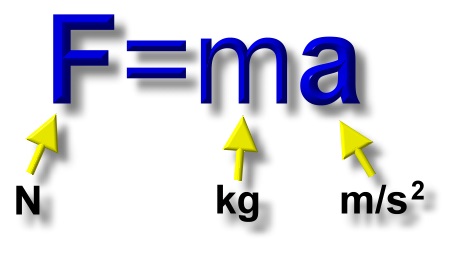
                First off for those that don’t know the equation for force generation is F=M*A.  F- is the end resultant of the other two and represents the amount of force that one can generate. Think of it as “if I hit a Makiwara how much energy is actually going into the darn thing”…that’s force.  But how do we get to this. Okay, you take the amount of Mass that one has to recruit (the ‘M’ in the equation obviously) and you times it by the speed or acceleration (the “A” in the equation) and that’s what the FORCE is.  So, if I have an amount of mass I can recruit of say 10, meaning my bone, muscle recruitment…..note I was not saying how much muscle I had..but it is part of it, and how much tissue is involved and I throw the punch just with my arm movement like a boxer and say the acceleration represents 10 again….well I have a equation of F=10*10 or F=100. In this case the outcome is in a unit called a Newton…as in Sir Isaac Newton.
 
                Great, cool! What the hell does that mean to me…and well….so what right! Well, to really dig deeper we would need to learn more about kinetic energy, power, Torque, Rotational power, Work energy and Efficiency, Impulse momentum, lines of force, efficiency, momentum, and velocity to name a few….Oh, Did I mention I totally GEEK out from time to time….but we don’t have time for all that so I am going to just show you what I was thinking using the old F=M*A equation as a fall back. And yes, I know its not 100% but lets face it we are learning to punch someone in the face…its not rocket science…well you know what I mean.
 
                First off let me say that this simple view will be based on how to improve someone’s force, it wont make them “better at Karate” in general, its just a point of view on force development in a single technique. I will be using Gyaku zuki, my favorite technique, to explain this theory of how to improve your power/Force. As an instructor I see so many mistakes and also find little answers when teaching people. We are intrinsically all genius level athletes at the core of our being, we just let things like life, work and such get in the way of our development in this regard. When we are born our body has an unlimited amount of potential to do anything and over time we tend to let things go, we work in one direction and away from our inner athlete and develop skills in other fields.
 
                Each human has a potential mark when talking about applying force. We have what I like to call a terminal velocity point for power generation and a terminal mass point as well, which means we have a terminal force point as well. What that means is we can only recruit so much mass and strength and move so fast so we can never out ‘power’ our own potential ‘power’ point. However I also think that 99.9% of Karate people tend to strike way way way below their terminal point. What I means is that big bad Sandan wacking away at that Makiwara is missing something that would  make him really bend the wood back or even snap it…and he does not know it! They strike away impressed with the ‘thwack’ it makes and forget that they could be devastatingly better.
 
                Many years ago a university did a study on force production by using a sensor pad and having a famous boxer (heavy weight) come in and strike it on a heavy bag and a famous Karate guy do the same. The boxer was ten years younger and a great deal bigger than the Karate expert and everyone thought it was not fair to have this be the corner stone of the study….except the Karate people…they felt bad for the champion boxer. The boxer struck the machine 8 times and his average was about 800N per strike, about enough to give you a major concussion and knock you out easily. This is actually very impressive as most Karate students up to Nidan average about 600N.
 
                The Karate instructor stepped up and hit the pad one time. He then walked over and picked up his jacket and put on his glasses and bowed to the scientists and left. His strike measured 1200N…enough to bread your skull and kill you. The reason was not he was stronger! The Heavy weight fighter was probably strong enough to really hurt the Karate instructor if it was a wrestling match….the reason…he was more efficient and had a much faster punch…the acceleration was off the scale.
 
                So, how do we as Karate-ka and Instructors help ourselves and others increase our force or power in our strikes. Well essentially you need to increase your mass or your acceleration…so get stronger and bigger or faster.
 
                Before we dig a bit deeper into this very shallow representation I want to make one thing clear, if you don’t have efficiency and technical form none of this will work! If your technique is off or you don’t have efficiency in your movements then not only will you lack the increase in power you want but you are more likely to hurt yourself and not generate any power really. In fact it may be that this is the most important part of being able to increase your striking power. The two people I mentioned were real, one was a boxer that threw punches with his trunk and arms only the other a Karate master that used his stance, trunk and arm to create power…this made it much easier.
               
                So, one way to increase “power” or “force” is to increase mass. This, in our terms, means the ability to recruit more muscle for movement and  or strength. However, this is counter productive. First off most tools we have to increase mass include things like weight training and this means increased slow twitch muscle that puts a strain on the ratio between fast twitch and slow twitch muscle. Guys bulk up all the time to get stronger, lifting heavy weights and getting HUGE….but slow as hell. They push when they hit because they cant snap out a technique at all.
                It sounds like I am down on weight training, Im not. However if it is used to condition muscles to guard against injury and also to help with muscle recruitment then it is a good thing. However most people get sucked into the “bigger is better” ideal and they go nutty and get big. They forget form and start doing Karate like a weight lifter…they get slow and they are inefficient in their movements as they are working to “flex” the muscles improperly. Again, weight training and body weight exercises are FANTASTIC as an adjacent training component, but in my opinion an inefficient and counterproductive method for increased power in your movements.  
               
                If you use only power lifting and conditioning to increase your force the equation would be look something like F=10*10 > F=20*7…due to the decrease in acceleration potential and the increase in mass…the first equation equals 100N and the second 140N. That’s a whole lot of work for 40N!
 
                Now lets look at the other side of the coin, increasing speed/acceleration. To do this you need to include one other component that will help even more…..repetition. To increase speed you need to recruit muscle fibers faster and cause mechanical improvements to get your speed up, so as in the case of Gyaku zuki you will need better trunk rotation, better rotation of the shoulders/hips and a better rear leg connection to the floor….then you need to do it faster!
 
                So, to increase speed you need to have better form….to me this is the GOLDEN items that will make your Karate better! Why get bigger and slower when you can maintain your current mass and just get faster?  Well its not that easy to get faster. We all have a simple maximum speed we can get to and no amount of training will increase this potential point…but the nice thing is most of us are not as fast as we could be and we can overcome a bit more of that maximum with efficiency in movement and repetition of movement to make them automatic and correct.
 
                Keeping in mind that there are several intangibles that are not being really looked at, of which I mentioned previously, let’s look at increase speed/acceleration and why it’s better than building mass. If you can learn to recruit the proper muscles and use better form, then do it faster by repetition and basically better mechanics as well as building better speed you will have a more positive resultant than just mass. Why? Because you don’t limit your speed and you maintain your mass. So your equation looks more like F=10*10 > F=10 *15 for a total increase from 100N to 150N or more.
 
                One of the missing points as well is if you have bad form it brings down the total of acceleration and mass as well so by increasing your speed and improving your technique and Keeping mass about the same you end up with a formula that looks something like F=10*10  > F=13*15. So a total of 195N a 95N increase for just keeping fit and improving your speed and form a bit. That’s a great trade off!
 
                So after all of this, what does it mean for a coach/Sensei/Instructor? Or even as a student?  Well it means that when you are teaching Karate it is far more effective to teach proper form, good functional movement and recruitment of the proper muscles than it is to have them doing extra weight training and calisthenics. Its great to stay in shape but if you have poor form you will still hit like a marshmallow and you wont be able to affect great power transfer to the target. When teaching look at form, functional transference and then focus on speed when looking for more power in the techniques.
 
                Power and speed have many variants that affect them and the way that power is created and transferred, but it has been my experience that when people say they want to hit harder they don’t pay attention to the second part of the equation and focus on building strength and mass…and this inevitably ends up slowing them down and killing their power. Train for speed and form and you will get more out of the whole process in the way of results than if you were to go lift weights and not pay attention to the other more important ways to get ahead of the power game.